
There are questions Africa can no longer afford to postpone.
Why is it that some of the continent’s most coveted lands are also places where people experience instability, fear, displacement and war?
Why do oil, gold, diamonds, uranium, cobalt and so many other resources - which ought to promise prosperity - sometimes become associated with tension, rivalry and suffering?
It would be wrong to claim that every African country with few natural resources lives in peace. It would be equally wrong to say that every African war is caused by oil or minerals.
But it would also be naive never to examine the relationship that can exist between strategic resources, the economic interests they attract, and the rivalries that develop around the territories that possess them.
When a land becomes strategic, the way the world looks at it changes. That is where our question begins.
WHEN A DISCOVERY CHANGES A COUNTRY’S DESTINY
Imagine an African country living modestly. Its people cultivate their fields. Fishermen go to sea or work along the rivers. Children attend school. The country has its difficulties, like every other country, but life goes on.
Then one day, a major discovery is announced: oil, gas, uranium, gold, lithium, or a mineral essential to tomorrow’s technologies.
Suddenly, a country that attracted relatively little attention becomes important. Delegations arrive. Investors show interest. Multinational companies study the ground. Foreign capitals watch closely. Speeches about stability, security, democracy and peace multiply.
These values are legitimate. Democracy belongs to every people. Peace is a right. Human dignity knows no border.
Yet one question remains: why does the attention paid to certain peoples sometimes seem to grow at the same pace as the strategic value of what lies beneath their soil?
And when a people living in peace are suddenly told that peace must be brought to them, they have every right to ask: what peace are we talking about?
WAR DOES NOT FEED ITSELF
We often speak of African rebellions as though they appeared spontaneously. Men take up arms. A region becomes uncontrollable. A border catches fire. Then the conflict lasts - five years, ten years, sometimes twenty.
But war does not feed itself.
A rifle was manufactured somewhere. Ammunition was purchased somewhere. A vehicle was paid for. Fuel was supplied. Communications were organised. Fighters were fed. Money changed hands.
So behind every conflict that drags on, we must have the courage to follow not only the men, but also the money, the weapons, the resources and the interests.
Who finances? Who sells? Who transports? Who buys? Who looks the other way? And ultimately, who gains something when the war continues?
Asking these questions is not an accusation. It is an attempt to understand.
NIGERIA: HOW CAN A WAR LAST SO LONG?
Consider Nigeria. It is Africa’s demographic giant, one of the continent’s leading economies and a major hydrocarbon producer.
Yet for many years Nigeria and neighbouring countries have faced Boko Haram, ISWAP and different branches of the insurgency in the Lake Chad Basin.
How can such a situation last for so long?
There are internal explanations that would be dishonest to ignore: poverty, the marginalisation of certain regions, radicalisation, unemployment, weak state presence in some areas, trafficking and difficult-to-control borders.
But these explanations do not exhaust the questions. When an armed organisation survives for years, renews its ranks, finds weapons, communicates and continues its operations, an economy necessarily exists that allows it to function.
The fundamental question is therefore no longer where a single man presented as the absolute leader of Boko Haram might be hiding. The movement has changed and fragmented.
The deeper question is this: how can a system of violence regenerate itself for so many years? And who, directly or indirectly, sustains the economy that allows it to survive?
FROM CONGO TO LIBYA: THE SAME PARADOX CHALLENGES US
Consider also the Democratic Republic of the Congo. Few territories in the world possess such an abundance of natural resources. Yet in the east of the country, generations have grown up amid conflict, armed groups, displacement and insecurity.
How do we explain to a child fleeing a village that the ground beneath his feet contains some of the raw materials the global economy needs? How do we explain that the subsoil is worth a fortune while the child’s family is simply searching for a safe place to sleep?
Consider Libya as well. Endowed with immense oil resources, it became, after the collapse of the state in 2011, a theatre of internal rivalries and foreign interventions whose consequences extend far beyond its borders.
Every situation has its own history. Every conflict has its own causes. They must never be confused.
But placing them side by side forces us to reflect: why does so much wealth not automatically produce more peace, stability and prosperity for the people who live above it?
THE FIRST VICTIMS ALWAYS HAVE A FACE
In geopolitical analysis, we speak of oil, uranium, spheres of influence, contracts, multinational companies and great powers. But behind these words are human beings.
There is the mother who takes her child in her arms and leaves her village without knowing where she will sleep that night. There is the farmer who abandons a field his family has worked for generations. There is the child whose school closes because weapons have replaced notebooks. There is the young man who, without work or prospects, becomes easy prey for those offering money, a weapon and a cause.
That is the true face of war.
Raw materials do not weep. People do.
AND WHAT ABOUT US, AFRICANS?
We must also have the courage to look at ourselves.
It would be too easy to attribute all our misfortunes to foreign powers. External influence truly gains strength when it encounters internal weakness: our divisions, corruption, injustices, political rivalries, sometimes fragile institutions, poorly negotiated contracts and, at times, our willingness to sacrifice the common good for personal ambition.
Great powers defend their interests. They always have, and they will continue to do so.
So the question we must ask is not only: what do they want from Africa?
It is also: what do we ourselves want for Africa? And why do we not defend our interests with the same determination that others defend theirs?
DEMOCRACY BELONGS TO PEOPLE, NOT TO RAW MATERIALS
Africa needs democracy. It needs the rule of law, credible elections, strong institutions, freedom and respect for human dignity.
But these principles must be defended everywhere with the same conviction. Democracy must not suddenly become more urgent because a country has discovered oil. Human rights must not depend on the quantity of uranium buried beneath a land. Peace must not become an international concern only when strategic interests are at stake.
An African living on land without oil has exactly the same dignity as an African living above an immense deposit.
That is what universality means.
WE ARE RICH BENEATH OUR FEET AND POOR IN OUR HOMES
This is our contradiction: we are rich beneath our feet and poor in our homes.
We sometimes export crude oil and import refined products. We export our minerals and then buy the goods manufactured from those same minerals. We possess resources essential to global industry, yet too many of our young people still cross deserts and seas because they see no future at home.
This model must change.
Sovereignty is not merely about owning a mine. We must know what it contains. We must know its value. We must negotiate its exploitation properly. We must process raw materials. We must train our engineers, geologists, technicians, lawyers and economists. We must build our industries. We must progressively master the entire value chain.
Possessing wealth that others know how to exploit better than you do is not enough to make you rich.
AFRICA MUST NO LONGER FEAR WHAT IT DISCOVERS BENEATH ITS FEET
The discovery of a deposit should create hope, not anxiety.
When oil is discovered, a mother should be able to think: my child will have a better school. When uranium is discovered, a patient should be able to hope: our country will be able to build better hospitals. When gold, lithium or cobalt is discovered, a young person should be able to say: I will be able to work here, learn a trade, build my life and raise my children in my own country.
That is what wealth should mean.
Not war. Not rebellion. Not a refugee camp. Not a child carrying a weapon.
OUR STRUGGLE IS NOT AGAINST THE WORLD
Africa’s struggle must not be directed against the West, the East or any particular people.
The world needs Africa. And Africa needs the world. We need partners, investment, technology, markets and exchange.
But a genuine partnership requires each side to remain standing.
Cooperation does not mean submission. Investment does not mean ownership. Assistance does not mean deciding in another’s place. And sovereignty does not mean isolation from the world.
Africa must simply learn to enter globalisation with its own interests, its own vision and its own dignity.
SO THAT WEALTH CAN BECOME A BLESSING AGAIN
Perhaps one day we will stop measuring the wealth of an African country only by the number of barrels it produces or the tonnes of minerals it exports.
We will measure it by the number of children receiving a proper education, the quality of its hospitals, the jobs created, the roads built, its researchers, its engineers, the security of its citizens and the peace enjoyed by its families.
Only then will oil, gold, uranium, cobalt, lithium and all the riches beneath our soil recover their true purpose: to serve human beings.
No raw material is worth the life of a child. No deposit is worth the destruction of a people. No economic interest should be greater than the peace of a nation.
We are rich beneath our feet. It is time for that wealth to enter our schools, our hospitals, our industries and our homes.
Above all, it is time for Africa to stop suffering because of what should have been a source of hope and happiness.
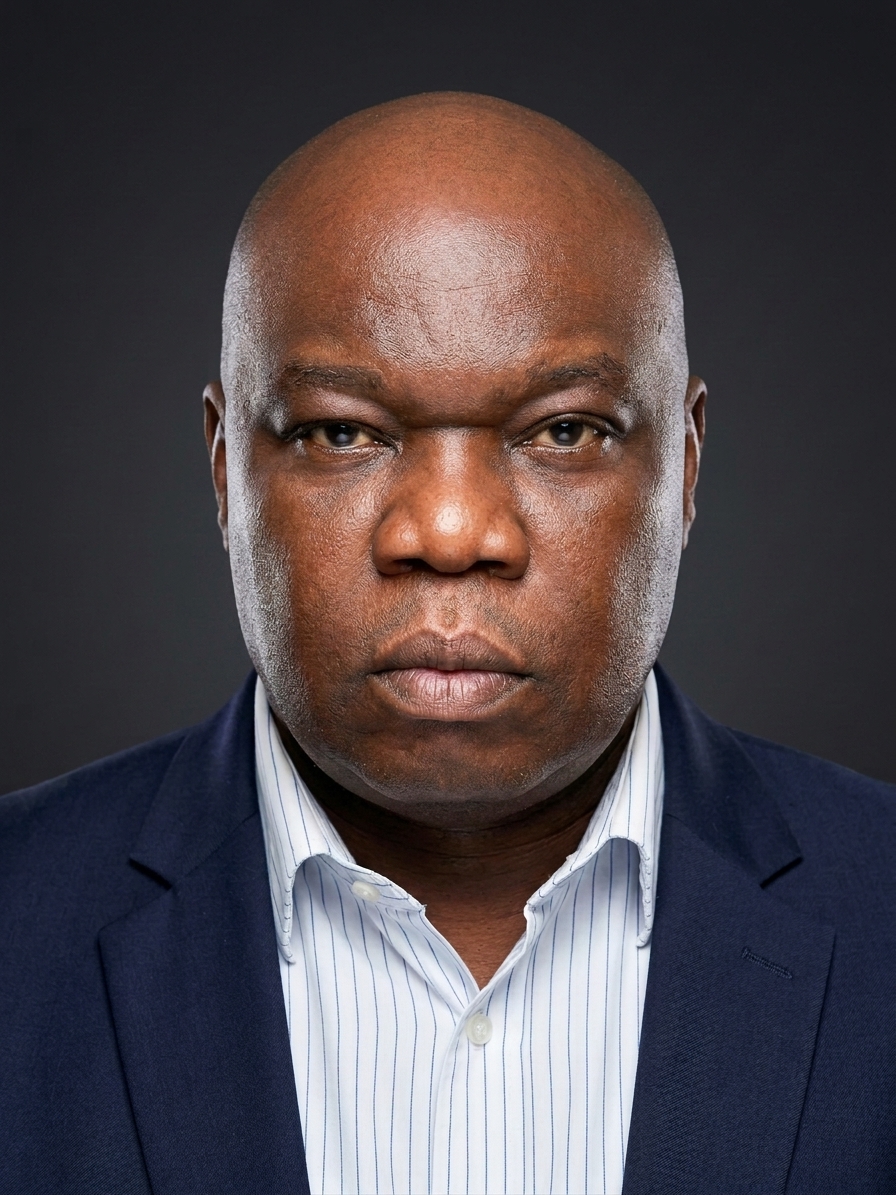
Amine Michel
Founding President - Editorial Director
COMMENTAIRES (0)